Gambia National Day 2027


More National days
National days topic
Return to the National days index for related events.
About the event
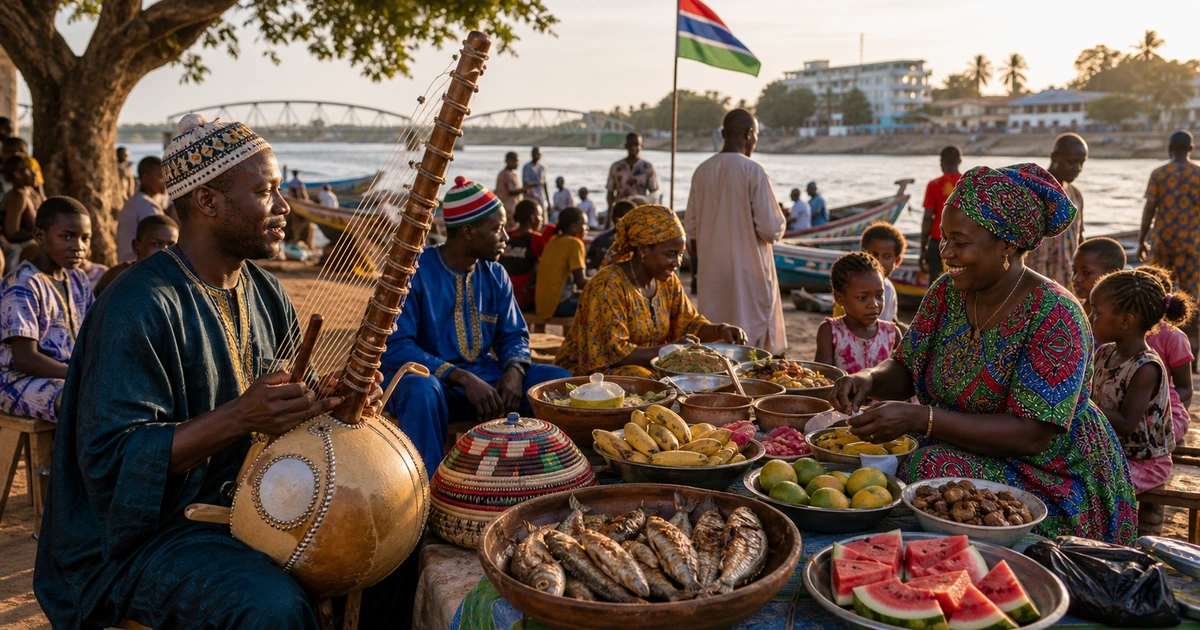
Kora music, wrestling culture, market food, beach towns and village gatherings all sit alongside formal ceremony, giving the holiday a warm, public rhythm. The date created Africa's smallest mainland state, a narrow country following the Gambia River through Senegal to the Atlantic coast.
The capital area hosts parades, official speeches and school participation.
Why this day
18 February marks the day in 1965 when The Gambia became independent from Britain. The date created Africa's smallest mainland state, a narrow country following the Gambia River through Senegal to the Atlantic coast.
The day became the main national celebration as the country moved from colony to independent monarchy within the Commonwealth and then to republic in 1970. Its meaning is closely tied to the river, trade history, Mandinka, Wolof, Fula and Jola communities, and the capital Banjul.
Today Independence Day is marked with parades, speeches, school participation, music and flags, especially around Banjul and the Independence Stadium area. The celebration is modest in scale but strong in community feeling, with families, neighbourhoods and schools highly visible.
Across The Gambia, the day feels local and river-shaped. Kora music, wrestling culture, market food, beach towns and village gatherings all sit alongside formal ceremony, giving the holiday a warm, public rhythm.
Timeline
- 1889British and French borders define the Gambia colony
- 1965The Gambia gains independence from Britain
- 1970Republic declared after a national referendum
Key figures
Stay for the event
Check-in 17 Feb, check-out 19 Feb 2027 — 2 nights around 18 February 2027. Change the dates to stay longer.
AREA
Find stays in BanjulGetting there
- Celebratednationwide
- CapitalBanjul
- Time zoneGMT (UTC+0)
Host country
- Currency: dalasi
- Language: English
- Driving: on the right
- Capital: Banjul
- Phone: +220
- Emergency: 112
- Electricity: 230 V, 50 Hz, plugs G
What to eat
Peanut stew with meat or vegetables, usually served over rice.
One-pot rice dish with tomato, vegetables and fish or meat.
Fish marinated with onion, lemon and mustard, then grilled or stewed.
Okra stew with fish or meat, palm oil and leafy greens.
Grilled meat with onions and mustard, popular at evening street stalls.
Dense local bread used for breakfast sandwiches and snacks.
What to drink
Hibiscus drink served cold and sweet at homes and markets.
Creamy drink from baobab fruit pulp, often sweetened with milk or sugar.
Strong green tea brewed slowly and shared socially in small glasses.
Culture & traditions
The capital area hosts parades, official speeches and school participation.
Griot musicians use the 21-string kora to carry history and praise songs.
The river defines the country's geography, trade routes and national imagination.
Wrestling events remain popular expressions of youth, strength and local pride.
Coming years
Gambia National Day 2028
- Friday 18 February 2028Next event date
Gambia National Day 2029
- Sunday 18 February 2029Event date
Gambia National Day 2030
- Monday 18 February 2030Event date