Gabon National Day 2027


More National days
National days topic
Return to the National days index for related events.
About the event
The date ended French colonial rule over a heavily forested equatorial country whose economy and politics were later shaped by oil, timber, manganese and close ties with France. Because the Bongo family ruled for more than five decades, the holiday has often carried both national pride and the weight of debates about power, wealth and democracy.
The capital hosts the main independence ceremonies, concerts and official speeches.
Why this day
17 August marks the day in 1960 when Gabon became independent from France. The date ended French colonial rule over a heavily forested equatorial country whose economy and politics were later shaped by oil, timber, manganese and close ties with France.
The day became Gabon's central independence celebration under presidents Leon Mba, Omar Bongo and Ali Bongo. Because the Bongo family ruled for more than five decades, the holiday has often carried both national pride and the weight of debates about power, wealth and democracy.
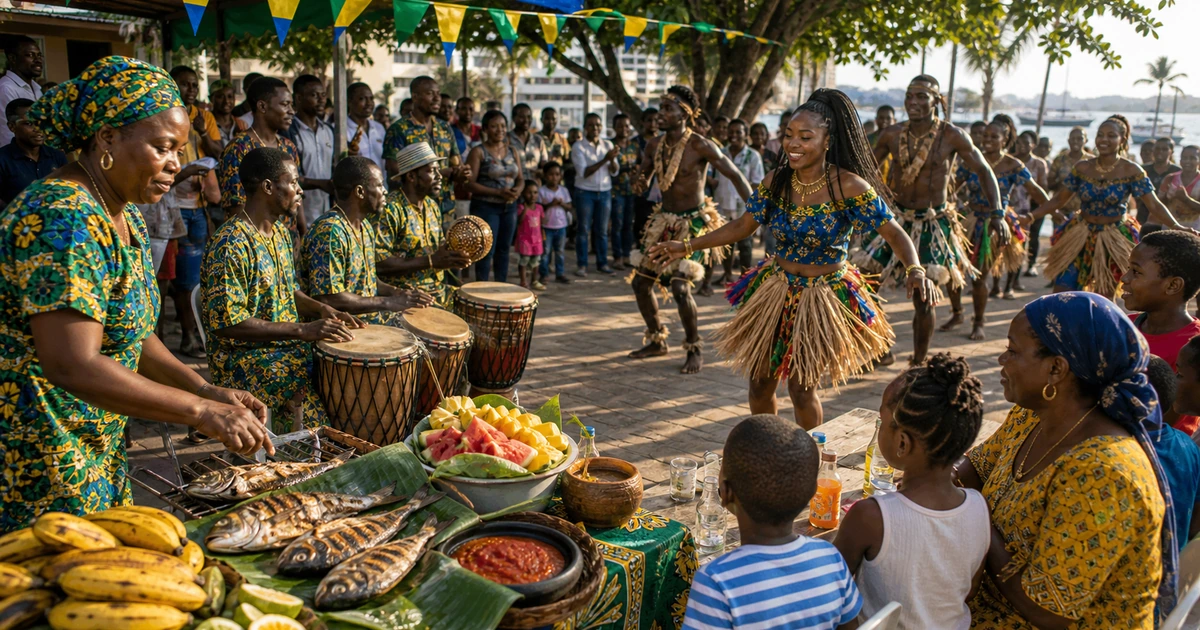
Today the day is associated with official parades, speeches, flags, concerts and cultural performances, especially in Libreville. Visitors see coastal ceremony, military display, forest identity, Fang and Myene traditions, and a capital looking out over the Atlantic.
Across Gabon, the national story is also environmental. Rainforest covers most of the country, and national parks, masks, music and coastal food all give Independence Day a setting beyond government ceremony.
Timeline
- 1885French colonial control expands around Gabon
- 1960Gabon gains independence from France
- 2023Military coup ends the Bongo family's long rule
Key figures
Stay for the event
Check-in 16 Aug, check-out 18 Aug 2027 — 2 nights around 17 August 2027. Change the dates to stay longer.
AREA
Find stays in LibrevilleGetting there
- Celebratednationwide
- CapitalLibreville
- Time zoneWAT (UTC+1)
Host country
- Currency: Central African CFA franc
- Language: French
- Driving: on the right
- Capital: Libreville
- Phone: +241
- Electricity: 220 V, 50 Hz, plugs C/E
What to eat
Chicken cooked in palm-nut sauce, widely treated as Gabon's national dish.
Salted fish cooked with tomato, onion and chilli for strong flavour.
Fermented cassava wrapped in leaves and served with sauces or fish.
Atlantic fish served with plantains, cassava or spicy sauce.
Groundnut sauce with meat or vegetables, common across central African kitchens.
Safou fruit boiled and eaten with salt, sometimes called African pear.
What to drink
Gabonese lager commonly served in bars and at public celebrations.
Traditional fermented palm sap used socially in many communities.
Sweet-spicy ginger drink served cold at markets and gatherings.
Culture & traditions
The capital hosts the main independence ceremonies, concerts and official speeches.
Spiritual practice using music, initiation and forest symbolism in some communities.
White-faced masks are among Gabon's best-known visual art traditions.
National parks and wildlife reinforce Gabon's rainforest identity.
Coming years
Gabon National Day 2028
- Thursday 17 August 2028Next event date
Gabon National Day 2029
- Friday 17 August 2029Event date
Gabon National Day 2030
- Saturday 17 August 2030Event date