
Fiji Day
BOOK HOTELS & FLIGHTS
Book stays for Fiji Day
AREA
OneSliders may earn a commission if you book through Booking.com.
- 1874Fiji ceded to Britain by indigenous Fijian chiefs
- 1970Fiji gains independence from Britain on 10 October
- 1987Military coups — Fiji becomes a republic, leaving the Commonwealth
Why Fiji celebrates 10 October
On 10 October 1970, Fiji gained independence from Britain, ending 96 years of British colonial rule. Independence was achieved peacefully through negotiation, and Fiji became the first Pacific island nation to hold the Olympic flag — a symbolic moment of national pride. The Queen remained head of state until the republican coups of 1987.
Fiji's colonial history began in 1874 when paramount chief Ratu Seru Epenisa Cakobau and other high chiefs signed the Deed of Cession, handing Fiji to Queen Victoria in exchange for protection from tribal warfare and foreign creditors. The British brought indentured Indian laborers to work the sugar cane fields — creating a complex multi-ethnic society that continues today.
Fiji Day is celebrated with a national parade in Suva, traditional ceremonies, meke dance performances and community gatherings. Schools stage historical pageants and the day ends with fireworks and musical events. The multi-ethnic character of modern Fiji — Indigenous Fijian, Indo-Fijian, Chinese and European communities — is reflected in the diversity of the celebrations.
- 202610 October 2026 · Saturday
- 202710 October 2027 · Sunday
- 202810 October 2028 · Tuesday
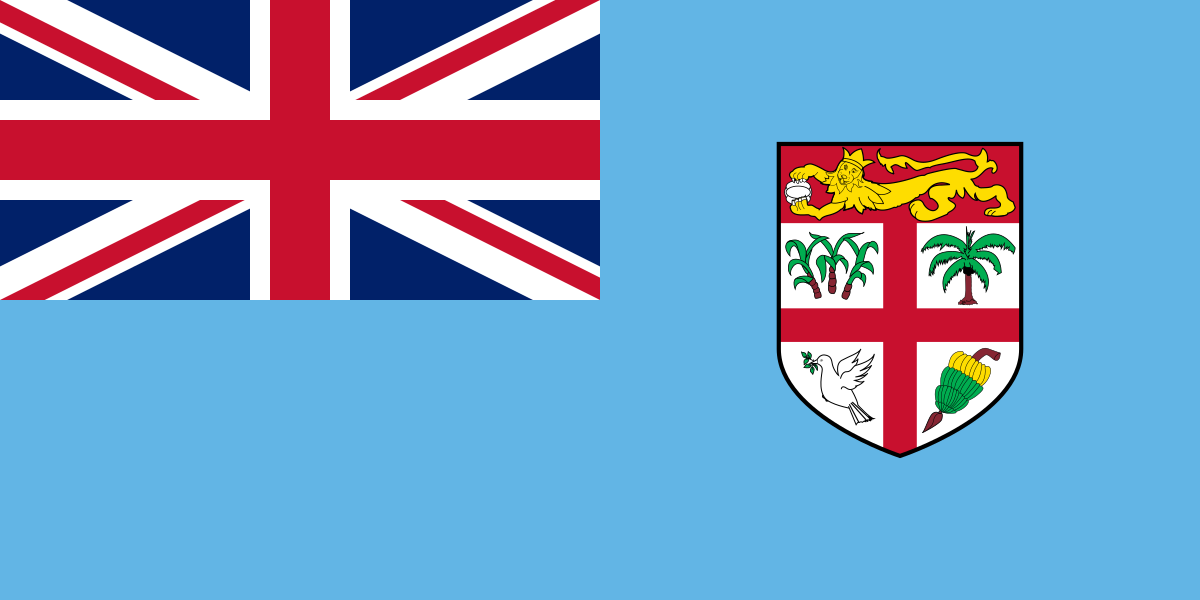
The Fijian flag has a light blue field with the Union Jack in the upper left corner and the Fijian shield on the right. The shield shows a British lion holding a cacao pod between its paws, with sugarcane, a coconut palm, a dove and a British cross. The light blue colour represents the Pacific Ocean that surrounds the islands.
Fijian food is shaped by the Pacific, India and the tropics — taro, coconut, cassava and fresh fish from the coral reefs are central to the diet. Indian influence through the descendants of indentured workers adds curry, roti and dhal to the Fijian table.
What to eat
What to drink
Fiji culture
Fijian culture is warm, communal and deeply tied to the land and sea. The sevusevu ceremony of welcome with kava, meke dance performances and the traditional bure house architecture define a living cultural heritage.