Ethiopia National Day 2027


More National days
National days topic
Return to the National days index for related events.
About the event
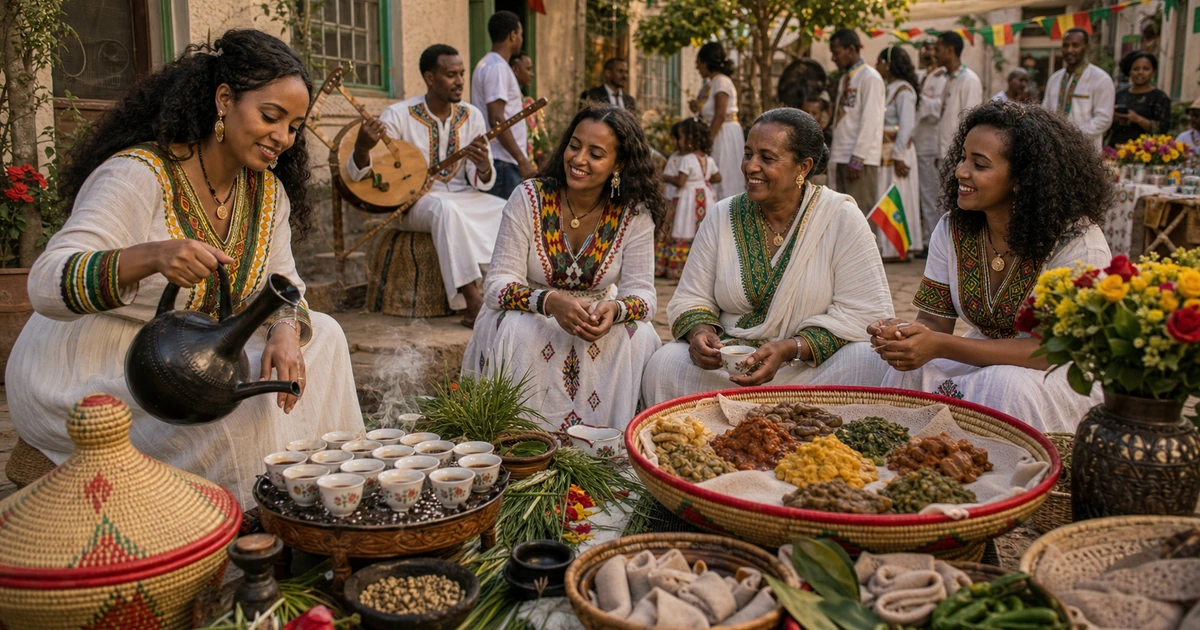
For visitors, Ethiopia's national story is also visible beyond the date: imperial monuments, Orthodox churches, coffee culture, regional dress, music and the memory of Adwa. Amhara, Oromo, Tigrayan, Somali, Afar and many other communities bring their own languages, foods and holidays, so any national day sits within a wider mosaic.
Timkat Orthodox Epiphany festival — the most spectacular religious celebration in Africa, with priests carrying the Ark replica through the streets.
Why this day
28 May marks the fall of the Derg regime in 1991, when rebel forces entered Addis Ababa and ended years of military dictatorship. Ethiopia has older patriotic dates, especially the victory at Adwa, but 28 May is tied to the current federal political order.
The day became a state national day because it opened the transition toward the Federal Democratic Republic and the 1995 constitution. It remains politically sensitive, because Ethiopians remember the Derg, civil war and the later federal system in different ways.
Official observance usually includes speeches, wreath-laying, flags and state media programming. For visitors, Ethiopia's national story is also visible beyond the date: imperial monuments, Orthodox churches, coffee culture, regional dress, music and the memory of Adwa.
Across Ethiopia, national identity is layered rather than simple. Amhara, Oromo, Tigrayan, Somali, Afar and many other communities bring their own languages, foods and holidays, so any national day sits within a wider mosaic.
Timeline
- 1896Victory at Adwa protects Ethiopian independence
- 1991Derg regime falls as rebel forces enter Addis Ababa
- 1995Federal constitution establishes the current republic
Key figures
Stay for the event
Check-in 27 May, check-out 29 May 2027 — 2 nights around 28 May 2027. Change the dates to stay longer.
AREA
Find stays in Addis AbabaGetting there
- Celebratednationwide
- CapitalAddis Ababa
- Time zoneEAT (UTC+3)
Host country
- Currency: Ethiopian birr
- Language: Amharic
- Driving: on the right
- Capital: Addis Ababa
- Phone: +251
- Emergency: 911
- Electricity: 220 V, 50 Hz, plugs C/E/F/L
What to eat
Slow-simmered Ethiopian chicken and egg stew in berbere spice sauce — served on injera on every Ethiopian celebration occasion.
Ground chickpea and lentil stew without meat — the essential fasting dish of Ethiopia's Orthodox Christian population.
Spiced raw beef seasoned with berbere and butter — a bold Ethiopian special-occasion dish requiring the freshest meat.
Chopped raw beef tartare mixed with butter, mitmita spice and mustard — Ethiopia's most prized raw meat dish.
Broad bean fasting dish cooked with onion and spices — a staple protein on Orthodox fasting days.
Warm spiced honey wine — the traditional Ethiopian celebratory drink with a 3000-year history.
What to drink
Ethiopia's national spiced honey wine — drunk from a berele flask at celebrations, weddings and coffee ceremonies.
Ethiopian coffee ceremony with three rounds — the world's original coffee culture, performed with incense, popcorn and small cups.
Fermented barley or teff beer — a lightly sour daily drink brewed in homes across highland Ethiopia.
Culture & traditions
Timkat Orthodox Epiphany festival — the most spectacular religious celebration in Africa, with priests carrying the Ark replica through the streets.
Eleven 12th-century churches carved from solid red rock — a UNESCO site and the Jerusalem of Africa.
Ethiopians hold the distance running world — Haile Gebrselassie, Kenenisa Bekele and Tigist Assefa have broken every major marathon and track record.
Ethiopia's ancient Ge'ez writing system — one of the world's few surviving indigenous African scripts, still used in Orthodox liturgy.
Coming years
Ethiopia National Day 2028
- Sunday 28 May 2028Next event date
Ethiopia National Day 2029
- Monday 28 May 2029Event date
Ethiopia National Day 2030
- Tuesday 28 May 2030Event date