Eritrea National Day 2027


More National days
National days topic
Return to the National days index for related events.
About the event
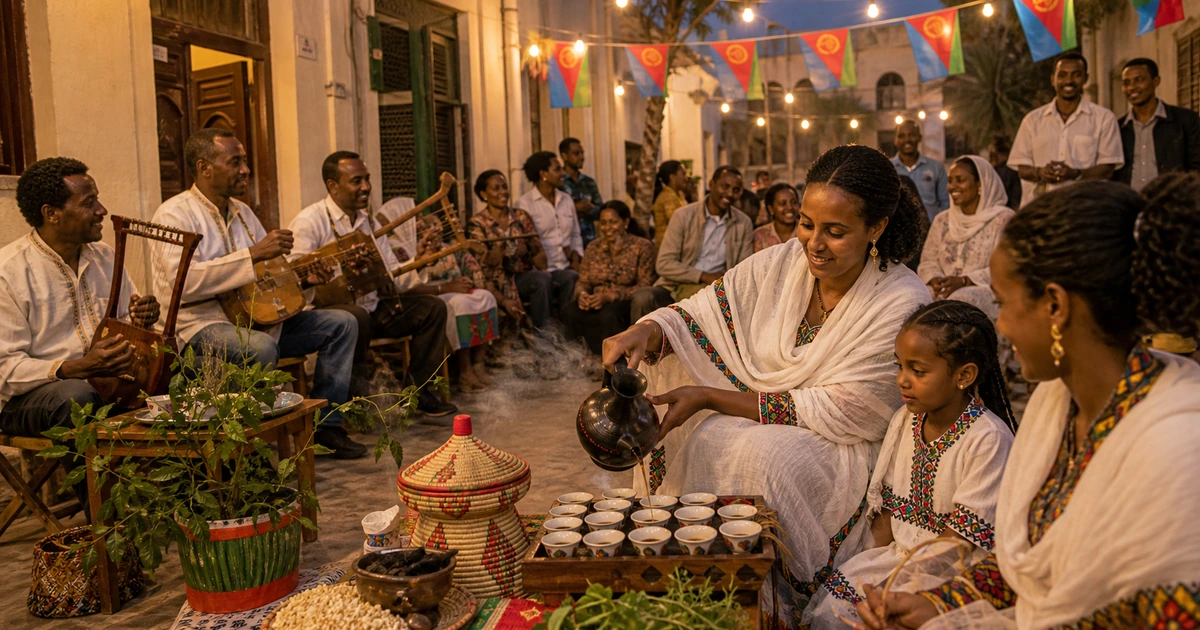
Across the country, the day carries a shared rhythm of remembrance and celebration: flags, traditional dress, coffee ceremonies, patriotic songs and family visits. Abroad, Eritrean diaspora communities often hold concerts and cultural events, keeping the independence story visible far from the Red Sea.
UNESCO-listed modernist architecture gives the capital a distinctive national backdrop.
Why this day
24 May marks the day in 1991 when Eritrean liberation forces entered Asmara, effectively ending Ethiopian control after a thirty-year war. Formal internationally recognised independence followed a 1993 referendum, but 24 May remains the emotional victory date.
The day became Eritrea's central national celebration because it connects independence to sacrifice, armed struggle and self-determination. The liberation war shaped families, diaspora communities and state identity, making the date much more than a constitutional anniversary.
In Asmara, the day is usually marked with official ceremonies, flags, music, military memory and public gatherings. Abroad, Eritrean diaspora communities often hold concerts and cultural events, keeping the independence story visible far from the Red Sea.
Across the country, the day carries a shared rhythm of remembrance and celebration: flags, traditional dress, coffee ceremonies, patriotic songs and family visits. The mood is proud but also shaped by the long cost of the liberation struggle.
Timeline
- 1890Italy declares Eritrea a formal colony on the Red Sea
- 1991Eritrean forces enter Asmara after long liberation war
- 1993Referendum confirms Eritrea as an independent state
Key figures
Stay for the event
Check-in 23 May, check-out 25 May 2027 — 2 nights around 24 May 2027. Change the dates to stay longer.
AREA
Find stays in AsmaraGetting there
- Celebratednationwide
- CapitalAsmara
- Time zoneEAT (UTC+3)
Host country
- Currency: Eritrean nakfa
- Language: Arabic, English
- Driving: on the right
- Capital: Asmara
- Phone: +291
- Emergency: 113
- Electricity: 230 V, 50 Hz, plugs C/L
What to eat
Sour flatbread served with spicy meat or vegetable stews for shared meals.
Hot beef stew with berbere spice, often eaten with injera.
Chickpea flour stew cooked with garlic, onion and spice for everyday meals.
Mild turmeric stew with vegetables, lentils or meat, balancing hotter dishes.
Torn flatbread mixed with spiced butter and berbere, common for breakfast.
Italian-influenced pasta with tomato sauce, a legacy of colonial-era food culture.
What to drink
Coffee ceremony with roasted beans, incense and repeated small cups.
Traditional fermented grain beer served at social and family occasions.
Honey wine similar to tej, used for festive toasts in some communities.
Culture & traditions
UNESCO-listed modernist architecture gives the capital a distinctive national backdrop.
Roasting, brewing and serving coffee is a key ritual of hospitality.
Music and diaspora gatherings keep liberation memory alive on 24 May.
The Red Sea port connects Eritrea to trade, Islam and coastal heritage.
Coming years
Eritrea National Day 2028
- Wednesday 24 May 2028Next event date
Eritrea National Day 2029
- Thursday 24 May 2029Event date
Eritrea National Day 2030
- Friday 24 May 2030Event date