Equatorial Guinea National Day 2026


More National days
National days topic
Return to the National days index for related events.
About the event
It is the only sovereign African state where Spanish is an official national language, and the date ended a colonial history split between the island of Bioko and the mainland Rio Muni region.
The island capital hosts major official parades and independence events.
Why this day
12 October marks the day in 1968 when Equatorial Guinea became independent from Spain. It is the only sovereign African state where Spanish is an official national language, and the date ended a colonial history split between the island of Bioko and the mainland Rio Muni region.
The day became a national independence celebration, but the country's post-independence history has been dominated by authoritarian rule, oil wealth and sharp inequality. That gives the holiday a formal state character rather than the broad civic feel found in some other national days.
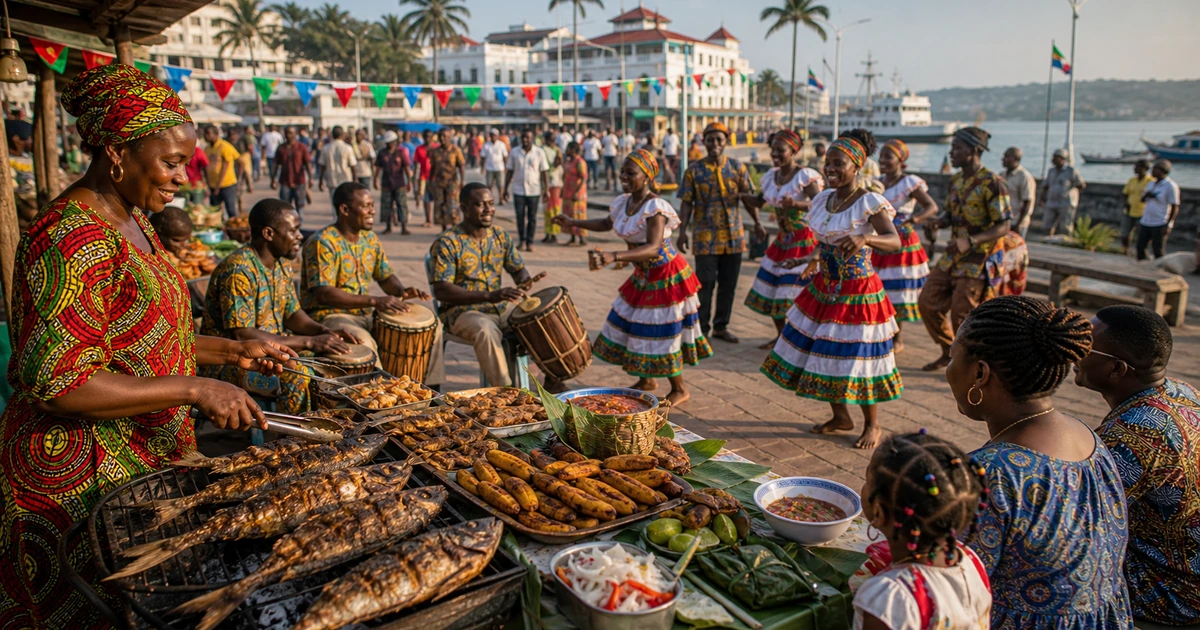
Today celebrations centre on official ceremonies, parades, speeches and cultural performances in Malabo or other selected cities. Visitors encounter a country with Fang, Bubi and coastal traditions, Spanish-language public life and a strong contrast between island capital and mainland territory.
Timeline
- 1778Spain gains colonial rights over the Gulf of Guinea islands
- 1968Equatorial Guinea becomes independent from Spain
- 1979Macías regime ends after a military coup
Key figures
Stay for the event
Check-in 11 Oct, check-out 13 Oct 2026 — 2 nights around 12 October 2026. Change the dates to stay longer.
AREA
Find stays in MalaboGetting there
- Celebratednationwide
- CapitalMalabo
- Time zoneWAT (UTC+1)
Host country
- Currency: Central African CFA franc
- Language: French, Portuguese
- Driving: on the right
- Capital: Malabo
- Phone: +240
- Emergency: 112
- Electricity: 220 V, 50 Hz, plugs C/E
What to eat
Spicy fish or meat soup with chilli and local seasonings.
Corn and bean dish adapted locally and eaten as a filling side.
Atlantic fish served with plantains, cassava or hot sauce near the coast.
Groundnut sauce with chicken, fish or vegetables over rice or plantains.
Sweet or savoury plantains served with stews and grilled dishes.
Boiled cassava paired with palm oil, greens or fish sauces.
What to drink
Traditional sugarcane drink found in parts of Central Africa.
Fermented palm sap used socially in villages and family gatherings.
Coffee culture reflects Spanish influence in cafes and homes.
Culture & traditions
The island capital hosts major official parades and independence events.
Fang music, storytelling and sculpture are central to mainland cultural identity.
Bioko's Bubi communities give the island a distinct historical voice.
The volcanic peak above Malabo is one of the country's strongest natural symbols.
Coming years
Equatorial Guinea National Day 2027
- Tuesday 12 October 2027Next event date
Equatorial Guinea National Day 2028
- Thursday 12 October 2028Event date
Equatorial Guinea National Day 2029
- Friday 12 October 2029Event date