Djibouti National Day 2027


More National days
National days topic
Return to the National days index for related events.
About the event
The date ended French colonial rule over a strategic Red Sea territory whose port, railway and location near the Bab el-Mandeb strait shaped its political importance. Visitors see a compact capital by the sea, desert landscapes nearby and a national identity tied strongly to port life and strategic crossroads.
The capital hosts the main independence ceremonies, marches and official speeches.
Why this day
27 June marks the day in 1977 when Djibouti became independent from France. The date ended French colonial rule over a strategic Red Sea territory whose port, railway and location near the Bab el-Mandeb strait shaped its political importance.
The day became the national independence celebration for a country built between Afar and Somali communities, Islamic traditions and an unusually international port economy. Djibouti's geography has kept it central to shipping, military bases and regional diplomacy long after independence.
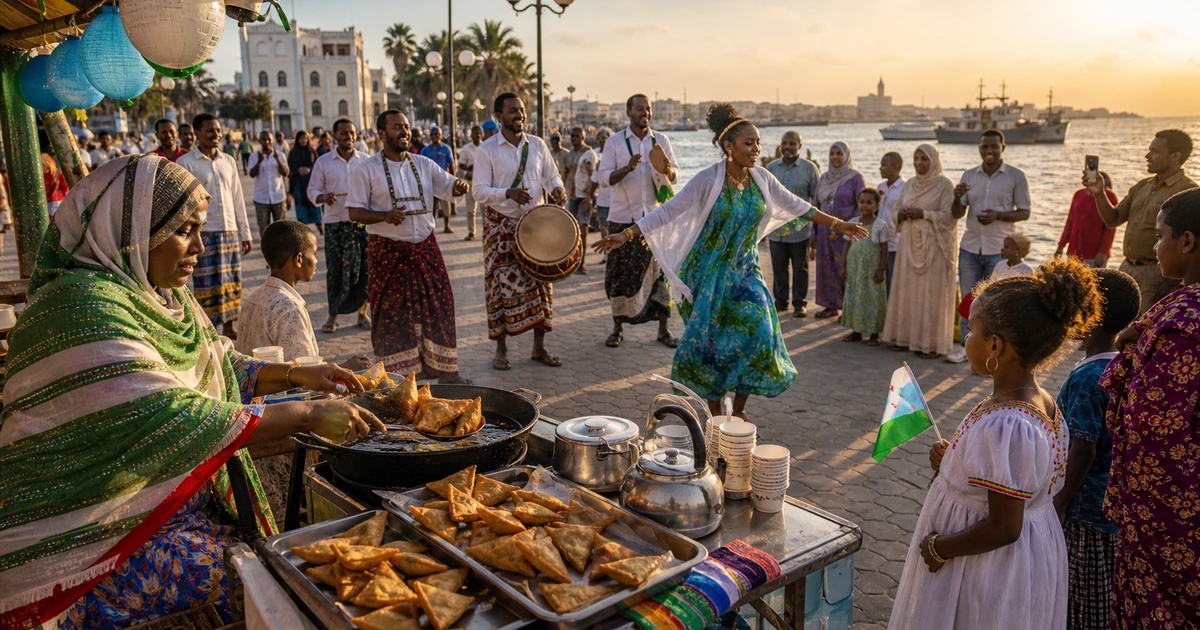
Today the day is marked with parades, official ceremonies, flags, music and family gatherings in Djibouti City. Visitors see a compact capital by the sea, desert landscapes nearby and a national identity tied strongly to port life and strategic crossroads.
Timeline
- 1888French Somaliland established around the Gulf of Tadjoura
- 1977Djibouti gains independence from France
- 2001Peace accord ends major civil conflict
Key figures
Stay for the event
Check-in 26 Jun, check-out 28 Jun 2027 — 2 nights around 27 June 2027. Change the dates to stay longer.
AREA
Find stays in Djibouti CityGetting there
- Celebratednationwide
- Time zoneEAT (UTC+3)
Host country
- Currency: Djiboutian franc
- Language: Arabic, French
- Driving: on the right
- Phone: +253
- Electricity: 220 V, 50 Hz, plugs C/E
What to eat
Spiced rice with lamb, cardamom and vegetables, often served for festive meals.
Goat soup with vegetables and chilli, common in Somali-influenced cooking.
Spongy fermented flatbread eaten with stews, honey or tea.
Fried pastry filled with spiced meat or lentils, popular during gatherings.
Red Sea fish served simply with lime, rice and hot sauce.
Fried bean fritters eaten as street snacks with chilli sauce.
What to drink
Sweet spiced tea with cardamom, cloves or cinnamon anchors hospitality.
Mango, guava and tamarind juices are common in cafes and markets.
Camel milk is important in pastoral food culture and rural hospitality.
Culture & traditions
The capital hosts the main independence ceremonies, marches and official speeches.
Oral poetry and song carry memory, honour and pastoral identity.
Group dances and wedding music bring Somali cultural energy to celebrations.
The salt lake is a striking national landscape and a symbol of Djibouti's geography.
Coming years
Djibouti National Day 2028
- Tuesday 27 June 2028Next event date
Djibouti National Day 2029
- Wednesday 27 June 2029Event date
Djibouti National Day 2030
- Thursday 27 June 2030Event date