Chile Fiestas Patrias 2027

More National days
National days topic
Return to the National days index for related events.
About the event
Why Chile celebrates 18 September On 18 September 1810, a criollo junta in Santiago declared self-government from Spain — not yet full independence but the beginning of the independence process.
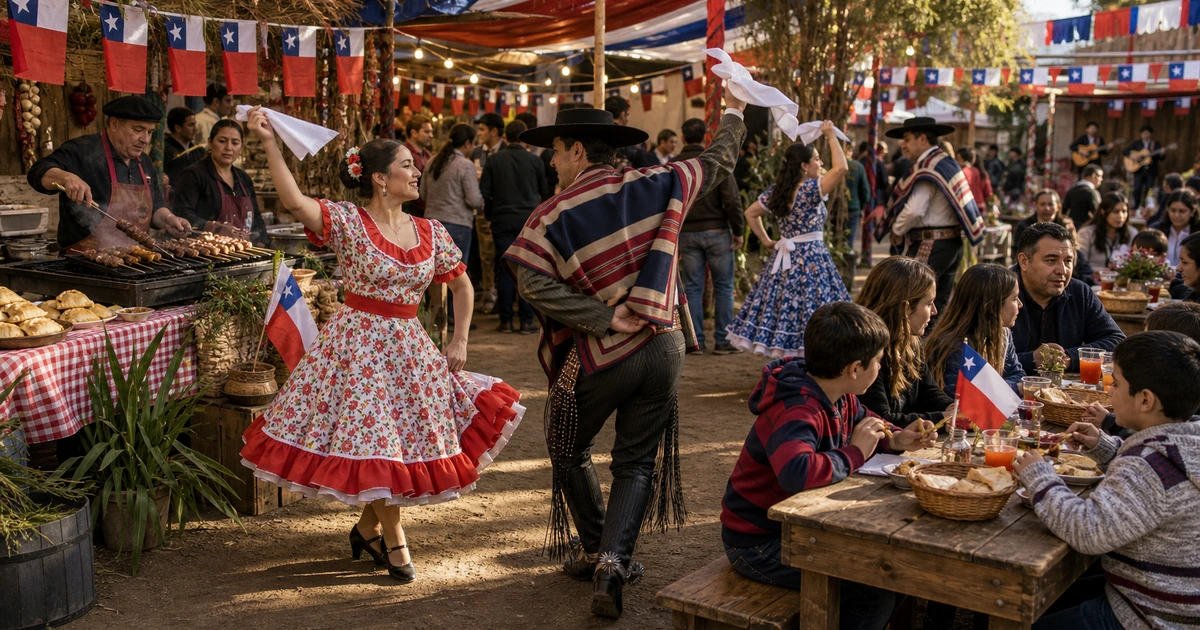
Chile's national dance — a courtship dance with handkerchiefs, performed at every fonda and school event.
Why this day
On 18 September 1810, a criollo junta in Santiago declared self-government from Spain — not yet full independence but the beginning of the independence process. This date, known as the Primer Grito de Independencia — First Cry of Independence — is celebrated as Chile's national day. Full independence was formally proclaimed in 1818 by Bernardo O'Higgins after years of war.
The celebration is known as Fiestas Patrias and spans 18-19 September and often more. The 19th is Armed Forces Day, with a military parade in Santiago. Together the two days are Chile's most important national holiday — more widely celebrated than Christmas by many Chileans.
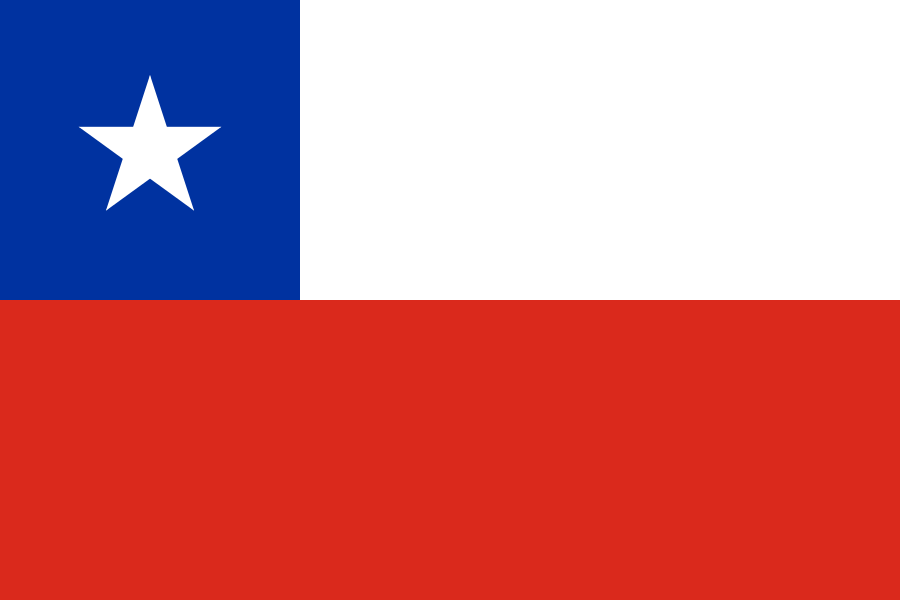
The festivities centre on the ramada — a decorated outdoor shelter where people eat, drink chicha, and dance cueca, the national dance. Every neighbourhood and workplace sets up a ramada or fonda for the holidays. Rodeo championships are held across the country, and the national colours of red, white and blue adorn every street.
Timeline
- 1810First National Government Junta established in Santiago
- 1818Independence formally declared by Bernardo O'Higgins
- AnnualFiestas Patrias — Chile's national celebrations across 18-19 September
Key figures
Stay for the event
Check-in 17 Sep, check-out 19 Sep 2026 — 2 nights around 18 September 2026. Change the dates to stay longer.
AREA
Find stays in SantiagoHost country
- Currency: Chilean peso
- Language: Spanish
- Driving: on the right
- Capital: Santiago
- Phone: +56
- Emergency: 131
- Electricity: 220 V, 50 Hz, plugs C/F/L
What to eat
Baked pastry filled with spiced minced beef, onion, black olives, egg and raisins — the classic Chilean empanada.
Chilean barbecue — beef ribs, chicken and sausages grilled slowly over charcoal in large outdoor pits.
Skewered and grilled beef heart marinated in cumin and garlic — popular at street stalls during Fiestas Patrias.
Hearty soup with beef or chicken, potato, pumpkin and corn on the cob — a Chilean family staple.
Fried pumpkin flatbread served plain or soaked in chancaca sweet syrup — classic street fair food.
Fresh salsa of tomato, onion, coriander and chilli — served alongside everything at the Chilean table.
What to drink
Fermented grape or apple drink — thick, sweet and mildly alcoholic — the Fiestas Patrias drink.
Grape brandy shaken with lemon juice, egg white and sugar — Chile and Peru both claim the national cocktail.
Sweet wine-based cocktail with pineapple ice cream — a Santiago Fiestas Patrias tradition.
Culture & traditions
Chile's national dance — a courtship dance with handkerchiefs, performed at every fonda and school event.
Traditional Chilean rodeo — huasos in spurs and ponchos guide cattle in half-moon arenas across the country.
Decorated outdoor structures set up in every neighbourhood for eating, drinking and dancing during the holidays.
Traditional horseman's dress — poncho, wide-brimmed hat and spurs — worn at rodeos and parades.
Coming years
Chile Fiestas Patrias 2028
- Monday 18 September 2028Next event date
Chile Fiestas Patrias 2029
- Tuesday 18 September 2029Event date
Chile Fiestas Patrias 2030
- Wednesday 18 September 2030Event date