Burundi National Day 2027


More National days
National days topic
Return to the National days index for related events.
About the event
Later violence and political crises make the holiday both a sovereignty celebration and a reminder of the need for reconciliation and national stability. Drumming is the most recognisable cultural symbol, while Gitega and Bujumbura both carry political and historical significance for national ceremonies.
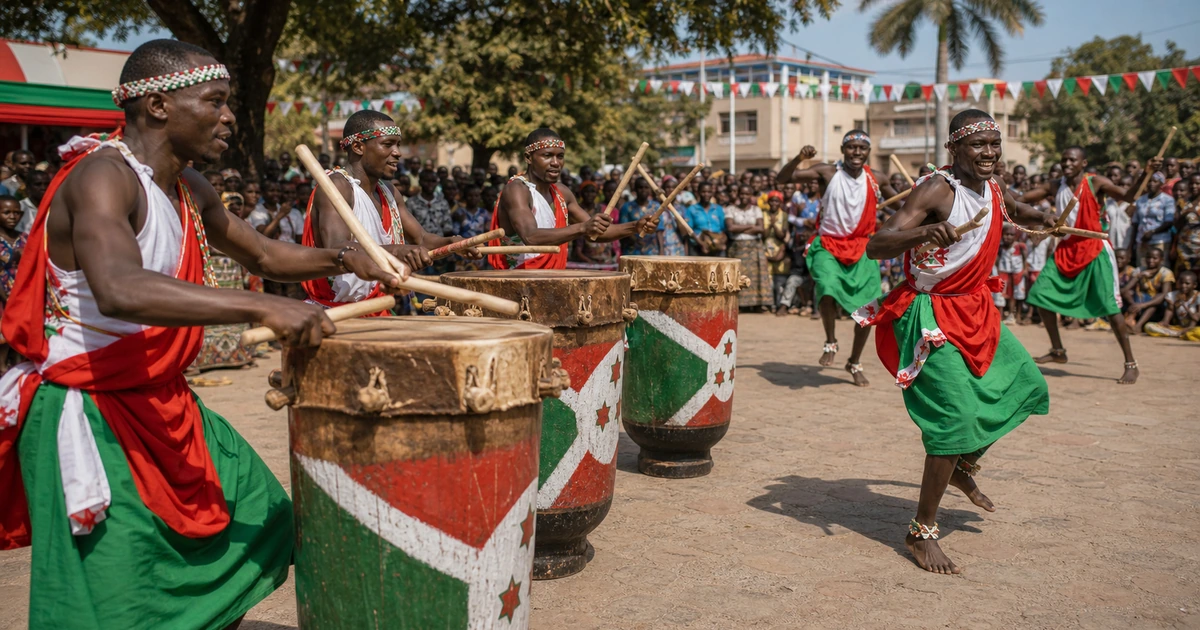
Burundi's ceremonial drumming is UNESCO-listed and central to national identity.
Why this day
Burundi celebrates Independence Day on 1 July, marking the date in 1962 when the country became independent from Belgian-administered Ruanda-Urundi. The day restored sovereignty after decades of German and Belgian colonial rule layered onto an older central African kingdom.
The date matters because Burundi entered independence with a strong royal history, deep social complexity and difficult regional politics. Later violence and political crises make the holiday both a sovereignty celebration and a reminder of the need for reconciliation and national stability.
Official events usually include speeches, wreath-laying, parades, church services and cultural performances. Drumming is the most recognisable cultural symbol, while Gitega and Bujumbura both carry political and historical significance for national ceremonies.
Timeline
- 1890Burundi becomes part of German East Africa
- 1962Burundi gains independence from Belgian trusteeship
- 1966Monarchy abolished and republic proclaimed in Bujumbura
Key figures
Stay for the event
Check-in 30 Jun, check-out 2 Jul 2027 — 2 nights around 1 July 2027. Change the dates to stay longer.
AREA
Find stays in BujumburaGetting there
- Celebratednationwide
- CapitalGitega
- Time zoneCAT (UTC+2)
Host country
- Currency: Burundian franc
- Language: French, Kirundi
- Driving: on the right
- Capital: Gitega
- Phone: +257
- Emergency: 112
- Electricity: 220 V, 50 Hz, plugs C/E
What to eat
Beans cooked with onion and tomato, one of the most common Burundian staples.
Cassava leaves cooked with peanuts or palm oil and served with starches.
Firm maize porridge eaten with beans, vegetables, meat or sauce.
Grilled meat skewers served at bars, roadside stands and public gatherings.
Green bananas cooked as a savoury starch with sauce or meat.
Lake Tanganyika fish, grilled or fried and prized around Bujumbura.
What to drink
Traditional fermented banana drink used socially in rural communities.
Popular Burundian lager often served at restaurants and holiday gatherings.
Fermented milk drink with a tangy flavour, common in the region.
Culture & traditions
Burundi's ceremonial drumming is UNESCO-listed and central to national identity.
The political capital carries royal and national symbolism during state events.
Warrior-style dance performances use rhythm, movement and formal costume.
The lake anchors Bujumbura life and gives celebrations a scenic gathering place.
Coming years
Burundi National Day 2028
- Saturday 1 July 2028Next event date
Burundi National Day 2029
- Sunday 1 July 2029Event date
Burundi National Day 2030
- Monday 1 July 2030Event date