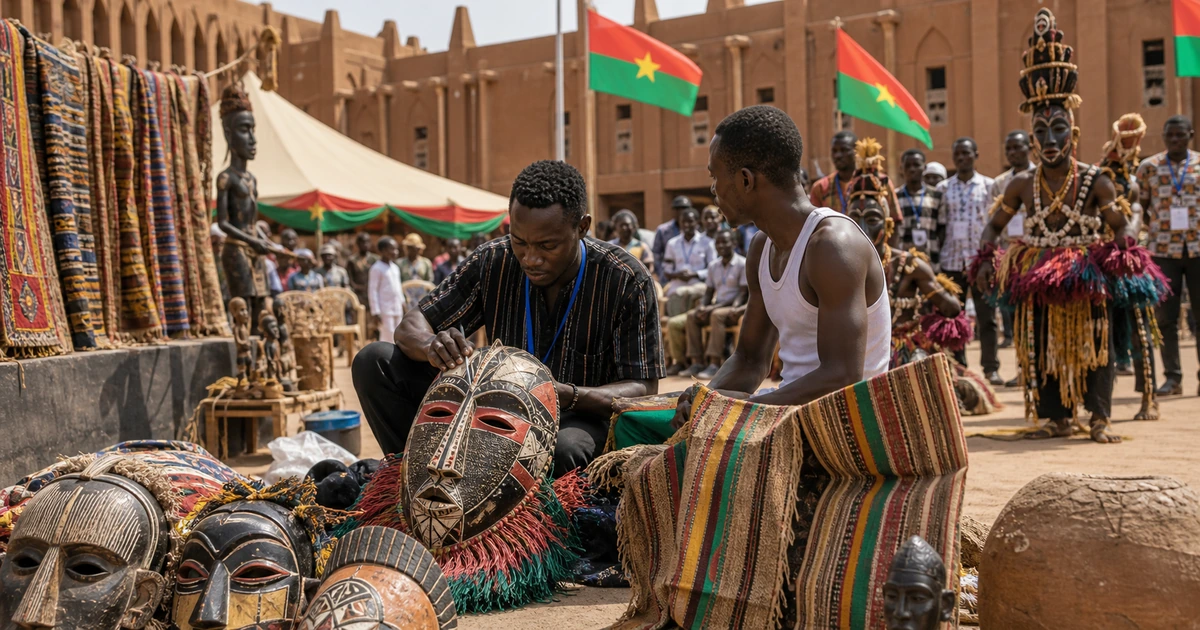
Burkina Faso National Day 2026


More National days
National days topic
Return to the National days index for related events.
About the event
Why Burkina Faso marks 11 December Burkina Faso marks its National Day on 11 December, remembering the proclamation of the Republic of Upper Volta in 1958 within the French Community.
Ouagadougou hosts Africa's major film festival, central to the country's cultural reputation.
Why this day
Burkina Faso marks its National Day on 11 December, remembering the proclamation of the Republic of Upper Volta in 1958 within the French Community. Full independence from France followed on 5 August 1960, but 11 December became the main national holiday.
The date reflects the country's complex path from French colonial territory to republic and then to Burkina Faso, the name adopted in 1984 under Thomas Sankara. The new name is often translated as land of upright people and remains central to national identity.
Celebrations rotate between regions and include official parades, cultural performances, speeches and military ceremonies. The day is also a reminder of Mossi political history, Sahelian resilience, craft traditions and the continuing challenges faced by the country.
Timeline
- 1896Mossi kingdom of Ouagadougou falls under French pressure
- 1960Upper Volta becomes independent from France
- 1984Thomas Sankara renames the country Burkina Faso
Key figures
Stay for the event
Check-in 10 Dec, check-out 12 Dec 2026 — 2 nights around 11 December 2026. Change the dates to stay longer.
AREA
Find stays in OuagadougouGetting there
- Celebratednationwide
- CapitalOuagadougou
- Time zoneGMT (UTC+0)
Host country
- Currency: West African CFA franc
- Language: French
- Driving: on the right
- Capital: Ouagadougou
- Phone: +226
- Emergency: 112
- Electricity: 220 V, 50 Hz, plugs C/E
What to eat
Seasoned rice cooked with tomato, vegetables and meat, popular for celebrations.
Millet or sorghum paste served with okra, baobab leaf or peanut sauces.
Free-range chicken grilled or stewed, known for firm texture and strong flavour.
Bitter greens cooked with fermented locust beans and ground peanuts.
Grilled meat skewers served with onions, chilli and street-side bread.
Bean cakes or steamed bean preparations eaten as filling snacks.
What to drink
Traditional millet beer brewed by women and served in calabashes.
Cold hibiscus drink sweetened with sugar and sometimes flavoured with mint.
Millet flour drink with ginger and tamarind, especially refreshing in hot weather.
Culture & traditions
Ouagadougou hosts Africa's major film festival, central to the country's cultural reputation.
Mounted imagery and chiefly traditions reflect the historic Mossi kingdoms.
Wooden masks from western Burkina Faso appear in ceremonies and cultural displays.
Open-air sculpture site near Ouagadougou connects modern art with national landscape.
Coming years
Burkina Faso National Day 2027
- Saturday 11 December 2027Next event date
Burkina Faso National Day 2028
- Monday 11 December 2028Event date
Burkina Faso National Day 2029
- Tuesday 11 December 2029Event date