Brazil Independence Day 2027

More National days
National days topic
Return to the National days index for related events.
About the event
Why Brazil celebrates 7 September On 7 September 1822, Crown Prince Dom Pedro I stood on the banks of the Ipiranga River in São Paulo state and shouted the "Grito do Ipiranga" — "Independence or death!" — declaring Brazil's separation from Portugal.
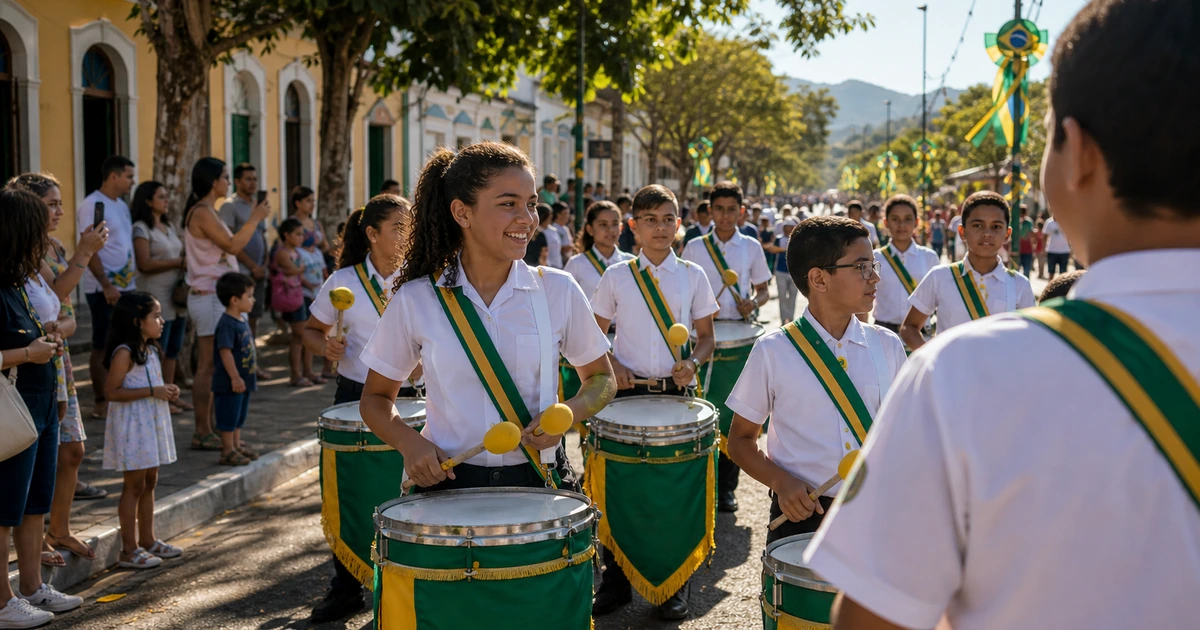
The formal Independence Day parade in Brasília features thousands of troops and military aircraft.
Why this day
On 7 September 1822, Crown Prince Dom Pedro I stood on the banks of the Ipiranga River in São Paulo state and shouted the "Grito do Ipiranga" — "Independence or death!" — declaring Brazil's separation from Portugal. The moment marked the birth of the Empire of Brazil and is commemorated every year as Dia da Independência.
Brazil's path to independence was shaped by the unusual circumstance of having its colonial rulers living on its soil. When Napoleon invaded Portugal in 1807, the entire Portuguese royal court fled to Rio de Janeiro — effectively making Brazil the centre of a global empire. When the court returned to Lisbon in 1821, Dom Pedro refused to follow and instead allied himself with the Brazilian independence movement.
Independence Day is marked by large military parades in Brasília and Rio de Janeiro, attended by the president and armed forces. State capitals across the enormous country hold their own ceremonies. Fireworks, concerts and civic gatherings fill the evening.
Brazil's independence came without the violent revolution of Spanish-speaking neighbours — it was largely a negotiated separation within the royal family. This peaceful transition is sometimes cited as shaping Brazil's political culture and its tradition of finding compromise over conflict.
Timeline
- 1808Portuguese royal court flees to Brazil — Rio becomes capital of the empire
- 1822Dom Pedro I declares independence on the banks of the Ipiranga River
- 1889Proclamation of the Republic replaces the empire
Key figures
Stay for the event
Check-in 6 Sep, check-out 8 Sep 2026 — 2 nights around 7 September 2026. Change the dates to stay longer.
AREA
Find stays in Rio de JaneiroGetting there
- Celebratednationwide
- CapitalBrasilia
- Time zoneBRT (UTC-3, multiple zones)
Host country
- Currency: Brazilian real
- Language: Portuguese
- Driving: on the right
- Capital: Brasilia
- Phone: +55
- Emergency: 190
- Electricity: 127/220 V, 60 Hz, plugs C/N
What to eat
Black bean and pork stew with smoked sausage and collard greens — served Saturday afternoons across Brazil.
Brazilian barbecue — thick cuts of beef, lamb and pork grilled over charcoal on skewers.
Chewy cheese bread made with tapioca flour — eaten for breakfast and sold at every padaria bakery.
Teardrop-shaped fried dough filled with shredded chicken and cream cheese — Brazil's most popular snack.
Chocolate truffle rolled in chocolate sprinkles — the essential Brazilian party sweet.
Thick frozen purée of açaí berries from the Amazon — served with granola and banana at every beach kiosk.
What to drink
Cachaça sugar-cane spirit muddled with lime and sugar — Brazil's national cocktail.
Sweet, slightly caffeinated soda made from Amazonian guaraná berries — more popular than Coca-Cola in Brazil.
Brazil's national spirit — distilled from fresh sugarcane juice, produced since the 16th century.
Culture & traditions
The formal Independence Day parade in Brasília features thousands of troops and military aircraft.
City neighbourhoods hold block parties with live samba bands from the afternoon into the night.
The Afro-Brazilian martial art and dance form — performed in public spaces on national occasions.
Football is Brazil's true national passion — informal games fill every beach and park on 7 September.
Coming years
Brazil Independence Day 2028
- Thursday 7 September 2028Next event date
Brazil Independence Day 2029
- Friday 7 September 2029Event date
Brazil Independence Day 2030
- Saturday 7 September 2030Event date