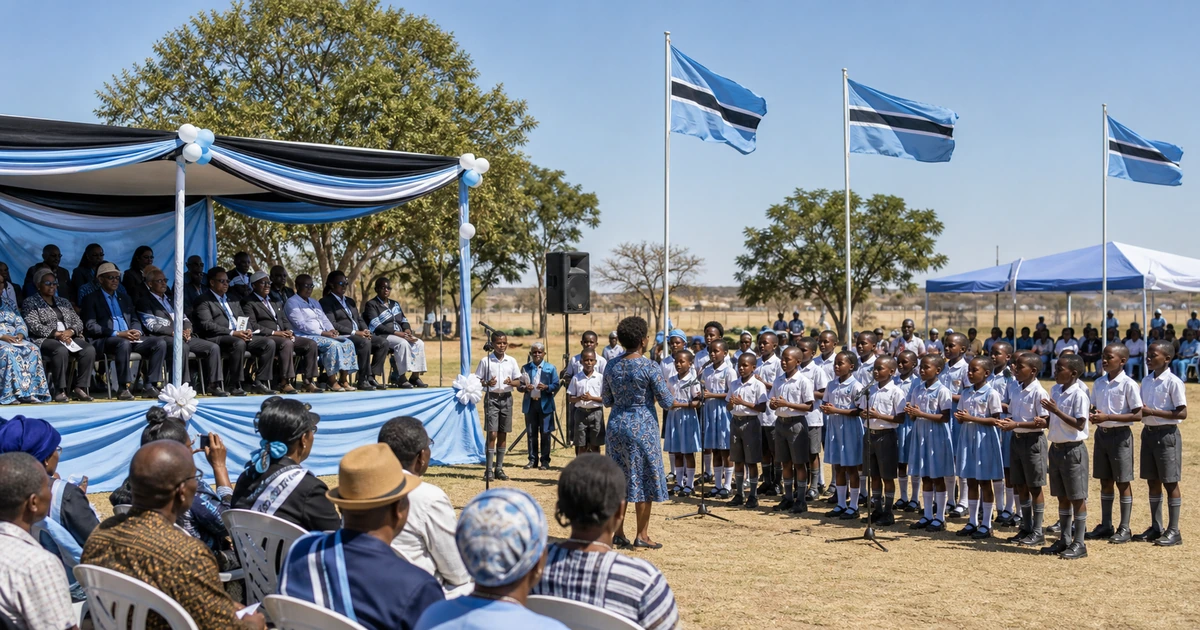
Botswana National Day 2027


More National days
National days topic
Return to the National days index for related events.
About the event
The date matters because Botswana built a reputation for stable democratic institutions, careful diamond management and peaceful development after independence. It often highlights Setswana language, cattle culture, traditional leadership, the Kalahari landscape and the idea of unity across a sparsely populated country.
Harvest thanksgiving ceremonies connect communities, chiefs and agricultural traditions.
Why this day
Botswana celebrates Independence Day on 30 September, marking the day in 1966 when the former Bechuanaland Protectorate became the Republic of Botswana. Seretse Khama became the first president, and the country began independence as one of the least developed states in the world.
The date matters because Botswana built a reputation for stable democratic institutions, careful diamond management and peaceful development after independence. That story is central to the national self-image, even while the country continues to face inequality, drought and debates over land and resources.
Independence Day is marked with official ceremonies, school events, music, dance and flags in Gaborone and district centres. It often highlights Setswana language, cattle culture, traditional leadership, the Kalahari landscape and the idea of unity across a sparsely populated country.
Timeline
- 1885Bechuanaland Protectorate created under British rule
- 1966Botswana gains independence under Seretse Khama
- 1967Diamond discovery helps transform the young economy
Key figures
Stay for the event
Check-in 29 Sep, check-out 1 Oct 2026 — 2 nights around 30 September 2026. Change the dates to stay longer.
AREA
Find stays in GaboroneGetting there
- Celebratednationwide
- CapitalGaborone
- Time zoneCAT (UTC+2)
Host country
- Currency: Botswana pula
- Language: English, Tswana
- Driving: on the left
- Capital: Gaborone
- Phone: +267
- Emergency: 911
- Electricity: 230 V, 50 Hz, plugs D/G/M
What to eat
Slow-cooked shredded beef, usually pounded and served with pap or bogobe.
Sorghum or maize porridge eaten with meat, vegetables or sour milk.
Wild or cultivated leafy greens cooked simply as an everyday side dish.
Beans and samp cooked together, a filling traditional grain-and-legume dish.
Fried dough bread eaten plain or filled, common at markets and gatherings.
Tripe and offal stew, a traditional dish served at important family events.
What to drink
Fermented maize drink served cold as a filling non-alcoholic refreshment.
Sorghum beer popular at social gatherings across southern Africa.
Caffeine-free red bush tea widely drunk in Botswana and neighbouring countries.
Culture & traditions
Harvest thanksgiving ceremonies connect communities, chiefs and agricultural traditions.
Traditional dance uses call-and-response singing, clapping and energetic movement.
Open public meeting spaces remain important symbols of consultation and governance.
The zebra appears on the coat of arms and reinforces the flag's black-white theme.
Coming years
Botswana National Day 2028
- Saturday 30 September 2028Next event date
Botswana National Day 2029
- Sunday 30 September 2029Event date
Botswana National Day 2030
- Monday 30 September 2030Event date